
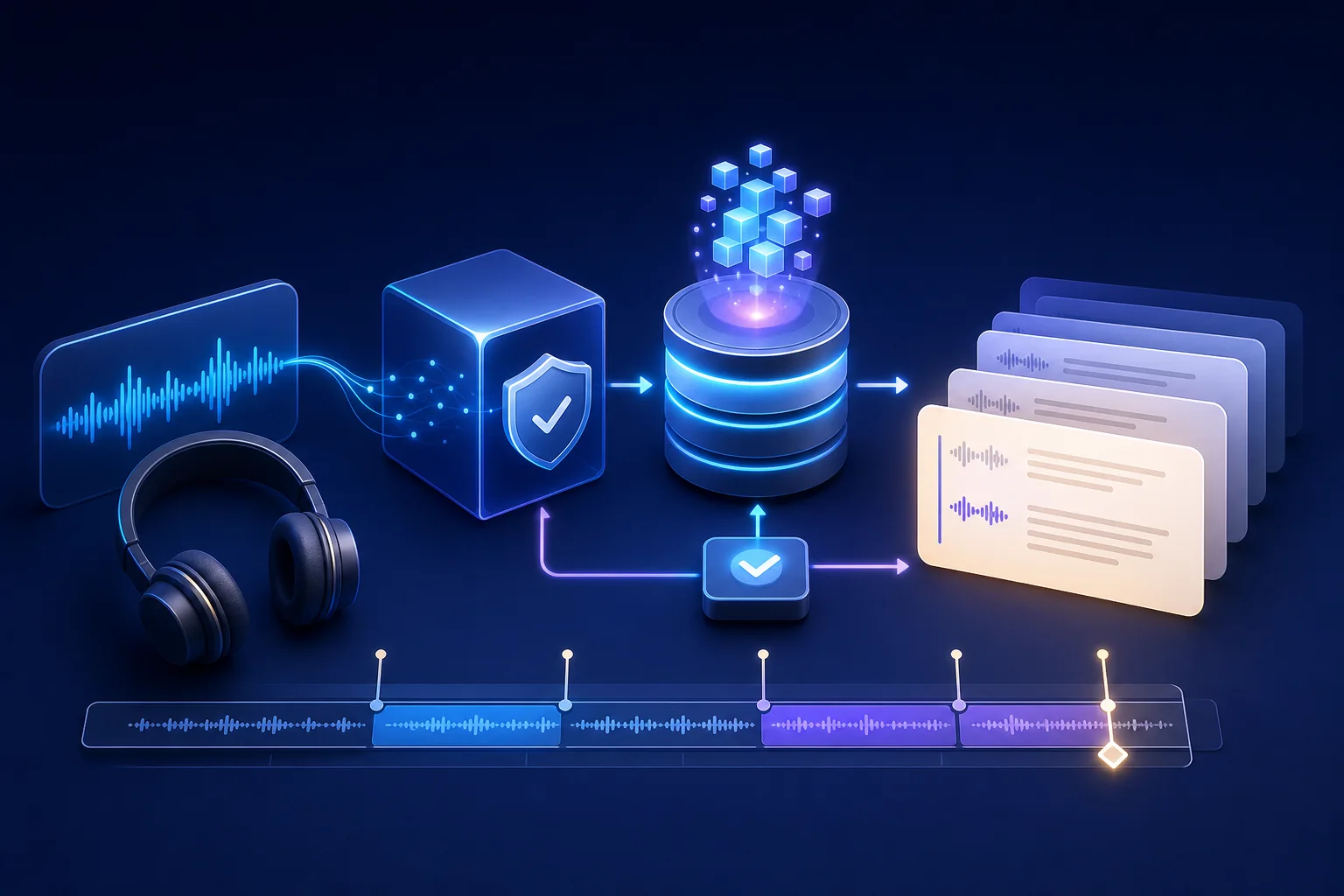
Audio Transcription Caching and Safe Background Processing
Meeting recordings, interviews, and training audio take longer to process than ordinary text. The main concern is often not waiting a few minutes. Users worry that closing a dialog will cancel the job, uploading the same file twice will create another charge, or a network interruption will leave a completed transcript outside the local timeline.
XiaoHei Daily Assistant has improved audio transcription caching and background processing across file identification, task status, billing, and local persistence.
How duplicate audio is identified
Before upload, the desktop client calculates a SHA-256 digest of the audio file and checks for a reusable result. The server combines the audio hash with the transcription configuration when deciding whether an existing transcript can be returned.
Two files with the same name but different contents will not be treated as identical. The same audio under a different filename can still match the cache when the relevant configuration is compatible.
A cached result contains more than plain text
Reusable data may include the full transcript, segments, detected duration, provider, request ID, and billing summary. XiaoHei stores relevant provenance with the Audio source record so users can understand where the result came from and whether caching was involved.
If a selected file expires or changes during processing, the workflow can reject the stale state rather than attaching a result to the wrong local file.
Why closing the progress dialog does not cancel the job
Long transcription runs as a background task with status polling. Closing the progress dialog allows the job to continue. When processing finishes, the app can notify the user and save the result into the work timeline. The desktop application itself should remain running until completion.
This is useful for long meetings: submit the recording, continue other work, and return after the result is ready. The interface distinguishes processing, completed, failed, timed-out, and empty-result states instead of leaving the user with an indefinite spinner.
Idempotency protects billing and storage
Each transcription uses a request ID so repeated status checks or safe retries do not become a brand-new purchase. Usage records, actual-duration billing, and the transcription job are linked through this identifier.
A special failure can occur after the server has completed transcription and billing but before the desktop database saves the timeline record. In that case, XiaoHei can retry local persistence using the existing result rather than uploading and transcribing the audio again.
Security and diagnostic boundaries
The client validates file extension, actual container or codec, file size, and duration before sending the task. This prevents damaged files and misleading extensions from entering the upstream workflow.
Error telemetry should contain only a file summary and necessary task diagnostics, not the transcript body or original media. Even with that boundary, recordings may include personal data, customer information, or confidential decisions. Users should obtain appropriate consent and select a transcription route that matches organizational policy.
Tips for a more reliable transcript
- Use one of the supported common audio formats.
- Do not move, overwrite, or delete the source during processing.
- Close the dialog if needed, but keep the application running.
- Read the specific failure state before resubmitting.
- Verify names, numbers, terminology, and action items.
- Add the corrected conclusions and tasks to the timeline.
Caching makes repeated work faster, but the larger benefit is consistency. Upload, processing, billing, local saving, and notification should describe one coherent job. That reliability is what turns audio into usable evidence for daily reports and retrospectives.